
Europe has spent twenty years moving paper onto screens. Bank statements. Boarding passes. Concert tickets. Tax returns. Invoices between companies. Inside shops, cards replaced cash, self-checkout replaced queues, and loyalty cards turned into apps. Digital receipts belong to the same long shift, and they are now arriving at the checkout.
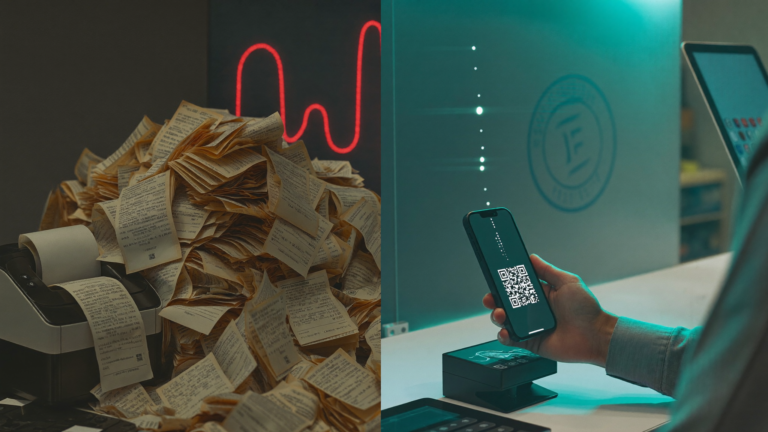
Four things pushed this along. Paper costs money to buy, to print and to store. Billions of receipts are printed every year and most are thrown away within minutes. Tax authorities want records they can read. And almost every customer at the till is now holding a phone. That last one is new. It was not true fifteen years ago.
This is happening at different speeds in different countries. The rules are not the same anywhere in Europe. The direction is.
What is a digital receipt?
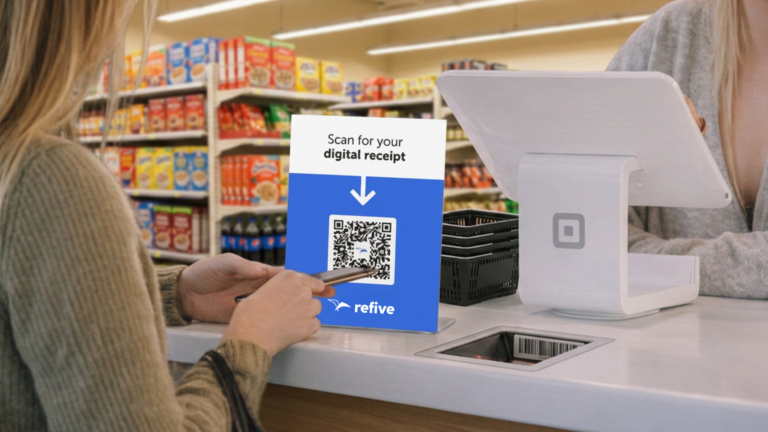
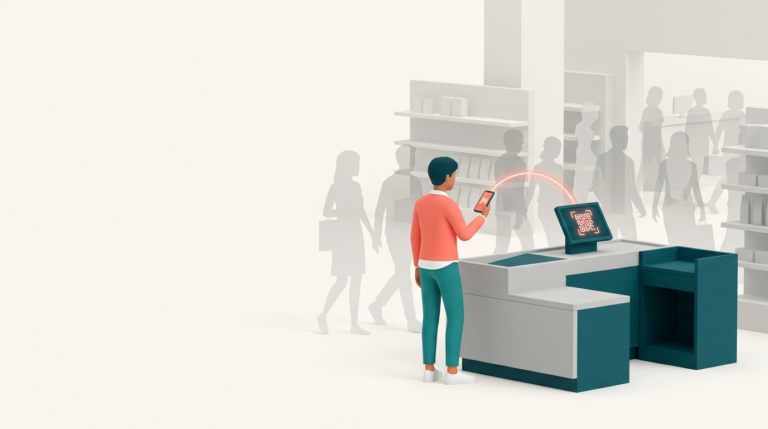
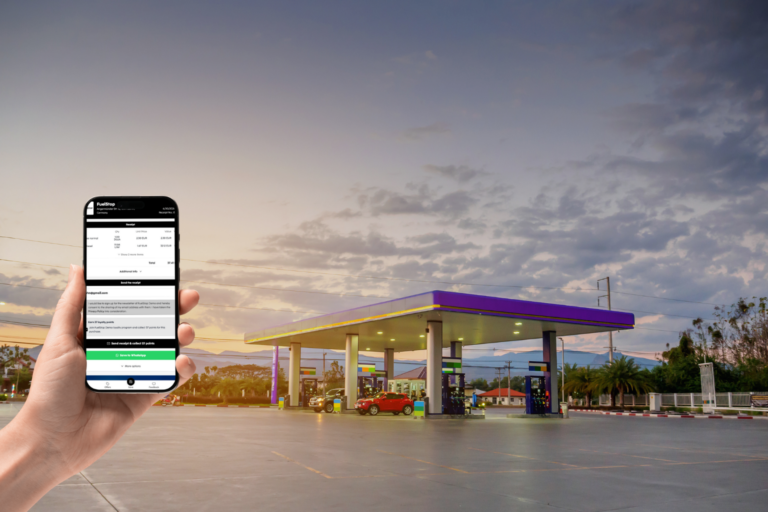
A digital receipt is the same proof of purchase as a paper one, sent to the customer’s phone instead of printed. At the till the customer scans a QR code or taps their phone. The receipt opens in their browser. There is no app to download and no account to set up.
They are also called e receipts or electronic receipts. The content is the same as the printed version: the shop, the date, the items, the prices and the tax. What changes is where it lands.
If you want the two formats side by side, we compared digital receipts and paper receipts in more detail.
Why is Europe moving away from paper receipts?
Governments are driving most of this, not retailers. They have three reasons: the volume of paper, the tax they cannot see, and the cost carried by businesses.
Start with the paper. Italy prints an estimated 30 billion receipts a year, a figure cited by the Fratelli d’Italia deputies pushing digital receipts there. Thermal paper contains chemical additives that keep it out of normal paper recycling, so most of it is waste from the moment it is printed. It is also part of why receipts got so long in the first place.
Then the tax. A printed receipt is a record only the shop holds. A digital one can be reported automatically. This is the same thinking behind e-invoicing in Europe, where companies already send each other invoices in a fixed digital format that tax authorities can read. Receipts are the part of the system that stayed on paper the longest.
Then the cost. Rolls, printers, servicing, storage. None of it is large on its own. Across a chain, over a year, it adds up.
Country by country: where Europe stands
Six countries are furthest along, and no two took the same route. France stopped the automatic print. Germany and Austria made the digital version legally equal to paper. Italy has allowed it for years without making it standard. Hungary and Spain are pulling the receipt into the tax system instead.
What does France’s anti-waste law do?
France went first. The anti-waste law of 2020, known as the AGEC law, banned shops from printing receipts automatically. Customers who want paper have to ask for it. The ban was due to start in January 2023, was delayed twice, and took effect on 1 August 2023. The French government’s guidance for consumers sets out how it works.
👉 More on what the French anti-waste law means for retailers.
Are digital receipts allowed in Germany?
Yes, and they have been since 2020. German shops using an electronic till have to give the customer a receipt, and the German finance ministry confirms that receipt can be issued electronically or on paper. The rule is called the Belegausgabepflicht.
What is changing is the rule itself. The governing coalition of CDU, CSU and SPD has agreed to scrap the duty to hand a receipt to every customer, with an obligation to issue digitally planned to take its place. Nothing has passed yet. Either way the printing stops being automatic.
👉 More on how digital receipts are being adopted in Germany.
What changes in Austria?
From October 2026, an Austrian shop can meet its receipt obligation by giving the customer a digital receipt, as the Austrian finance ministry explains here. The change comes from the Cash Register Package, the Registrierkassenpaket. Customers keep the right to ask for paper. Shops are not forced to switch, so this is permission rather than pressure.
👉 More on Austria’s digital receipt rules.
Why has Italy taken so long?
Italy has allowed digital receipts for years, under conditions. What it has not done is make them the default. In June 2025 the Chamber of Deputies’ Finance Committee approved resolution 8-00081, filed by deputy Saverio Congedo, which asks the government to phase out the automatic paper receipt starting with large retailers. A resolution commits the government to act. It is not a law, and the decrees that would make it binding have not been written.
👉 More on Italy’s on and off relationship with digital receipts.
What is Hungary doing?
Hungary is building receipts into its tax system directly. Businesses report receipt data to the tax authority, and a new generation of e-cash registers can hand the receipt to the customer digitally at the same time, through the tax office’s own eNyugta system. Paper stays available for customers who want it. It is the clearest example in Europe of the receipt and the tax record becoming one thing.
Why will Spanish receipts carry a QR code?
Spain is going after invoicing software rather than paper. Under the rules known as VERI*FACTU, software used to issue invoices will have to produce records that cannot be quietly altered, and each invoice will carry a QR code the customer can scan to check it. That covers simplified invoices, which is what Spanish shops hand over as receipts.
The deadline has moved more than once. The Spanish tax agency’s current timetable gives companies until January 2027 and everyone else until July 2027.
What this changes at your checkout
Whatever the rule is in your market, the same thing happens at the counter. The customer scans instead of takes.
That moment is worth looking at closely. The customer has their phone out, they are looking at a screen you control, and they are waiting for something to load. This has not happened in physical retail before.
It matters because shops know so little about who comes in. By industry estimate, more than 80% of in-store customers leave without the retailer knowing who they are. No name, no contact, no way to reach them before they choose to come back. We wrote about the levels of knowing your customers if you want to see where most shops sit.
Most systems will put a PDF on that screen. It is accurate, it is compliant, and it ends there.
What loads when the customer scans
A digital receipt does not have to be only a document. Because it opens in a browser, the same page can carry more than the purchase.
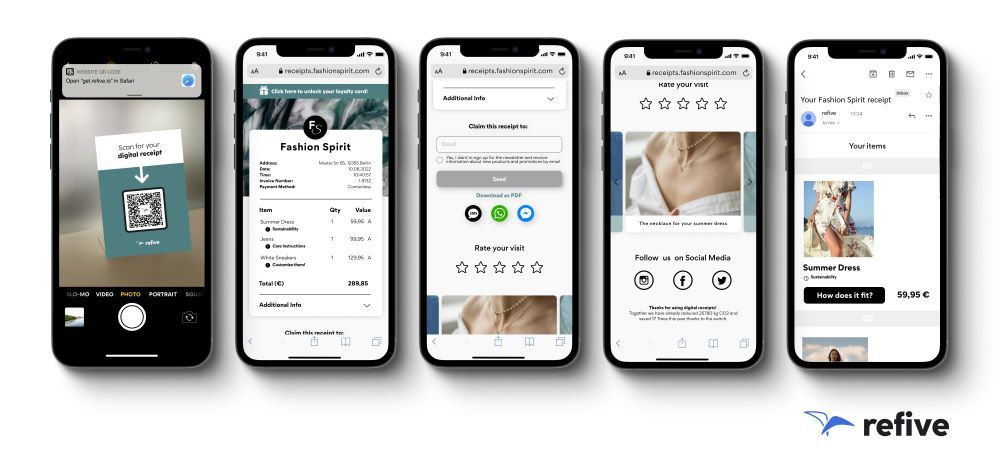
With refive, the QR code appears on the checkout screen, a small stand, or the payment terminal. Customers who prefer can tap their phone instead of scanning. The receipt opens in the browser with no app.
That same page can do more. The customer can add an email address or phone number and agree to hear from the shop. They can join the loyalty programme in one tap. They can see an offer based on what they just bought, or leave feedback.
Reach is what separates this from the other ways a shop tries to learn who its customers are. A loyalty scheme reaches the people who join it. An app reaches the people who download it. A receipt reaches everyone who buys something, because you have to hand one over anyway. There is more on turning receipts into a marketing channel.
Where this leaves you
Europe’s receipt rules will keep arriving at different times and in different shapes. France has already switched. Austria is next. Germany is preparing to drop the receipt rule it wrote in 2020. Italy has a plan and no decrees. Hungary and Spain are pulling the receipt into the tax system. The dates will move. The direction has held for a decade.
For a retailer, that makes the rule change the easy part. Your till software will handle it, and one day the paper will simply stop coming out. The harder question is what takes its place, because that is the part nobody legislates and the part that decides whether the change costs you money or earns some back.
A receipt reaches every single customer who buys from you. It is the one thing you hand to all of them. Once it moves to a screen you control, it can start a relationship instead of ending a transaction. That is a choice you make once, when you pick how to issue it.
If you are weighing that up, our guide to choosing digital receipt software covers what to look for.
👉 Book a demo and see what a digital receipt can carry in your stores.
FAQ
No European country requires every shop to issue a digital receipt today. France bans automatic printing, so digital is the practical default there. Hungary requires receipt data to be reported digitally. Germany, Austria and Italy allow digital receipts without forcing them. Spain will require a QR code on software-issued receipts from 2027.
No. Printing paper receipts is legal everywhere in Europe. France is the strictest case, and even there the rule is that a shop cannot print automatically. If a customer asks for paper, the shop can print it. No European country has banned paper receipts outright.
Yes, in every European country with rules on this. France, Germany, Austria, Hungary and the plans under discussion in Italy all keep the customer’s right to a printed receipt on request. The change is to the default, not to the choice. Paper becomes the exception rather than the automatic outcome.
A digital receipt carries the same information as a printed one, so it serves the same purpose as proof of purchase. Rules vary by country and by shop policy, so retailers should check their own returns terms. In practice a digital receipt is easier to produce months later, because it does not fade.
Not necessarily. Some digital receipts arrive through a retailer’s app or by email, which requires the customer to have signed up. Others open directly in the phone’s browser when the customer scans a QR code at the till, with no app, no account and no details required at the moment of purchase.
A digital receipt goes to a shopper as proof of purchase. E-invoicing is the exchange of invoices between businesses in a fixed digital format that tax authorities can read. E-invoicing in Europe is much further along, which is part of why receipts are now being pulled in the same direction.
Mostly yes. France’s ban applies to shops of every size. Austria’s rules apply to any business using a cash register. Some countries set thresholds by turnover or exempt very small traders, so the detail varies. Any shop with an electronic till should assume it is covered.