
Italy came close to making the digital receipt the default in every shop this year. It didn’t happen.
A proposed amendment would have made digital the standard for every payment, cash included, with paper printed only if the customer asked for it. It was filed, debated, and covered widely. Then it was absent from the law that passed in April 2026.
What’s left is a plan Parliament agreed in 2025. Large chains go digital in 2027. More shops in 2028. Everyone by 2029. The decrees that would make those dates enforceable have not been written.
So Italian retailers are watching a countdown with no clock. They are waiting for permission to do something they have been allowed to do for ten years.
What the receipt actually is in Italian law
The receipt a shop gives you in Italy is called a documento commerciale. Issuing one is compulsory. The shop cannot skip it.
The sale is also reported to the Agenzia delle Entrate, Italy’s tax office. That happens automatically, through a certified till called a registratore telematico. It has worked this way for years, whether or not you walk out holding paper.
So “digitalising the receipt” means the customer’s copy. The tax office’s copy went digital long ago.
What Italy actually decided in 2026
Two things became law this year. Neither is the mandate.
The first links card terminals to the certified till, so card payments are matched automatically against receipts. The obligation comes from the 2025 budget law and applies from 1 January 2026. The machinery arrived later: the Agenzia delle Entrate set the pairing rules in Provvedimento n. 424470 of 31 October 2025, opening the web service in March 2026 with a 20 April deadline to register terminals already in use. Fines run from €1,000 to €4,000, and repeat offenders can lose their licence for a period. The goal is catching tax fraud rather than saving paper.
The second scrapped the rule requiring shops to keep paper card slips for ten years. The PNRR decree, DL 19/2026, was published in the Gazzetta Ufficiale on 19 February 2026 and took effect the next day. Article 8 comma 1 replaces the paper slip with bank and payment processor records.
The proposal that drove the headlines came from deputy Gianluca Caramanna. It would have made the digital receipt the default for all payments from 1 January 2027, with paper only on request. Through March 2026 it was covered as an amendment awaiting a vote, with approval far from certain. It is not in the final law. It may return.
This has been legal since 2016
Italy has allowed electronic receipts since a Ministry of Economy and Finance decree dated 7 December 2016. The decree text sets two conditions. The customer must agree in advance. The retailer must guarantee the document is authentic and unaltered.
That first condition is an opt-in. The customer says yes before anything changes. Anyone who hasn’t agreed still gets paper.
This is the rule Italy’s early movers use today. The 2025 parliamentary resolution builds directly on it. What the resolution wants to change is the default: digital as standard, paper on request.
A future mandate therefore does less than the coverage suggests. It flips the default. It drops the opt-in. It does not make the digital receipt legal, because it already is.
There is nothing to wait for. All 2027 changes is whether your competitors have caught up. The same pattern holds across most of the continent, where digital receipts are already legal well ahead of being compulsory.
What the phased plan says
The reference point is resolution 8-00081, passed unanimously by the Chamber’s Finance Committee on 17 June 2025 and filed by deputy Saverio Congedo. The committee record shows the timeline slipped during debate, from 2026 to 2027. The full parliamentary file is public.
The stages:
- 1 January 2027: large chains, the grande distribuzione, meaning supermarket and hypermarket groups
- 2028: other VAT-registered merchants above a turnover threshold, still undefined
- 2029: every merchant, any size
A resolution tells the government to legislate. It is not law itself. The decrees have not appeared. These are dates to plan around, and nothing firmer.
Italy’s biggest supermarkets moved years ago
Esselunga, one of Italy’s largest supermarket chains, launched its scontrino virtuale in June 2023. It was the first big grocery name in the country to do it.
Coop Alleanza 3.0 followed in March 2024. It is the largest cooperative in the Coop group, one of Italy’s biggest supermarket networks, running 350 stores from Friuli-Venezia Giulia down to Puglia. In the year before the switch it printed more than 100 million paper receipts.
Coop’s own service page sets out how it works. The digital receipt goes to registered members. Members get a short slip at the till, and the full document lands in their account area, where it stays searchable for 26 months.
The design is worth noting. Membership is what satisfies the 2016 opt-in condition, and the searchable archive gives members a reason to want the digital version. The receipt becomes a service for customers the retailer can already identify.
Neither company waited for a mandate.
The window closes when the mandate opens
Today, a digital receipt in Italy is an advantage. You identify your customers. Your competitor’s customers walk out anonymous.
The day the mandate lands, that ends. Every shop will issue digital receipts because the law says so.
Retailers moving now are not buying compliance. Compliance arrives on its own schedule and costs them little, because the receipt they already run will meet the rule. What they are buying is two or three years of customer data that nobody can collect retroactively. A customer who shopped anonymously in 2026 stays anonymous in 2026 forever.
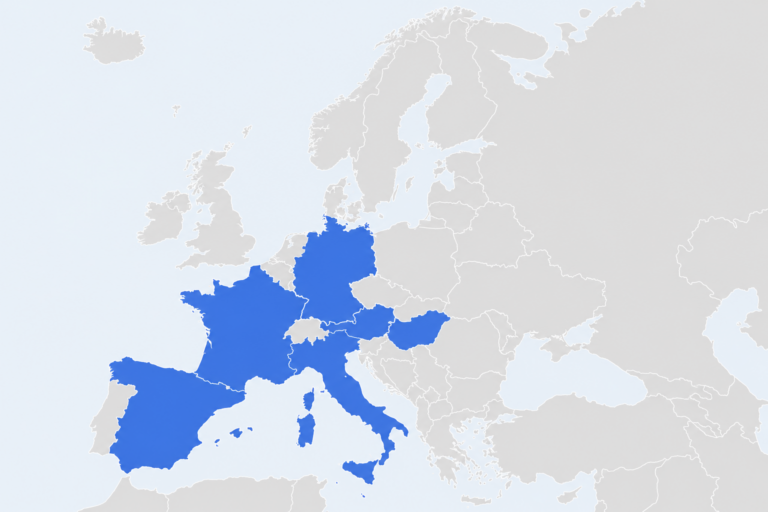
Europe is heading one way. France banned automatic printing in 2023. Germany allows digital receipts and has a draft bill proposing an obligation from 2029, still only a draft. Austria’s 2026 cash register package lets a digital receipt satisfy the requirement from October 2026, while keeping it optional. Only the dates are in question. The pattern across European receipt rules is consistent: legal first, compulsory later.
What a receipt is worth once it identifies someone
Physical stores still generate most of retail revenue and run blind. Many in-store customers leave unidentified. Online, every visitor is tracked. In store, most are ghosts.
The barrier has always been friction rather than technology. Typing an email at the till slows the queue. Loyalty sign-up takes effort. Cashiers ask inconsistently. Most retailers accepted anonymity as the price of running shops.
EY research with Shopify put a number on what changes. Customers a retailer can recognise spend up to three times more per order, and account for 76% of in-store sales growth.
Two facts sit together here. New customers keep getting more expensive to acquire. Most of the customers already in your stores are people you cannot contact again.
The receipt is the one moment when a customer is stationary, holding their phone, and expecting something from you.
How refive works
refive is an in-store customer identification and engagement platform. It starts at the digital receipt.
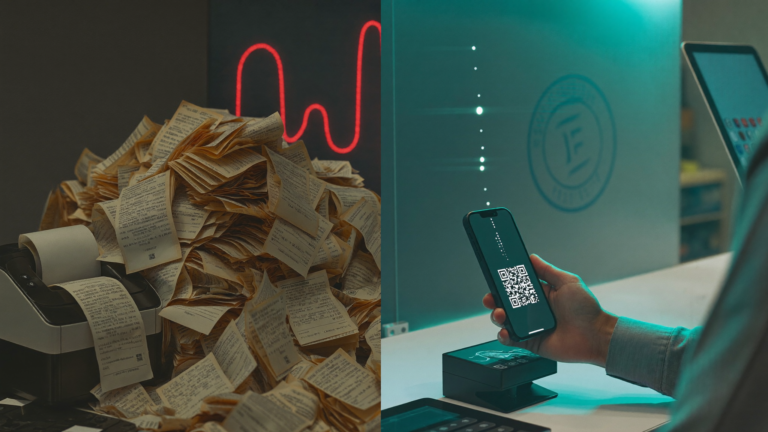
For the customer, nothing unusual happens. A QR code appears on the checkout screen, the payment terminal, or a printed stand. They scan it. The receipt opens in their phone browser. No app, no account, nothing to type. Paper stays available for anyone who wants it.
For the retailer, this is the point. When the receipt opens, refive creates an anonymous customer profile: the purchase attached to a lasting ID, holding no personal details. That customer becomes recognisable on their next visit, and across stores. Nobody asked them for anything at the till.
The profile then grows in stages. Anonymous, then identified, then opted-in, then loyalty member. The customer sets the pace.
Nothing new goes into the store. refive works with existing POS systems and needs no extra hardware or apps, which is a practical difference worth checking when comparing digital receipt software.
What that gives you to work with
The scan is the start. What it unlocks is ordinary retail work that most physical stores cannot do today.
A CRM that includes your store customers. Email and phone capture happens on the receipt, with GDPR-compliant opt-in, rather than at the till. Your database stops being an online-only asset.
Campaigns aimed at people who only ever shop in store. Once a customer is identified, offers can be built around what they actually bought.
Loyalty sign-up without a form. Enrolment sits on the receipt as a single tap, which removes the queue-time problem that limits most loyalty schemes.
Reviews you didn’t have to ask for. The receipt can invite feedback and route satisfied customers to Google or Tripadvisor.
Attribution for in-store sales. Tracking tags fire when the receipt opens, connecting online ad spend to purchases that happened in a physical shop.
None of this requires the mandate. It requires in-store customer data, which the receipt is already positioned to collect.
What to do before 2027
Italy will get its mandate. When it arrives, every retailer will issue digital receipts, and the advantage disappears.
Until then, the same action builds a customer database.
The legal basis exists. It has existed since 2016. It needs nothing further from Parliament. Italy’s largest grocers worked this out in 2023 and 2024, and they are two years of purchase history ahead of everyone still waiting for a decree. The practical question is no longer whether to move, but which digital receipt system fits the way your stores already run.
See what happens the moment a customer scans →
FAQ
Yes. A Ministry of Economy and Finance decree of 7 December 2016 allows the documento commerciale to be issued electronically. Two conditions apply: the customer must agree in advance, and the retailer must guarantee the document is authentic and unaltered. Customers who have not agreed still get paper. This is the basis Esselunga and Coop Alleanza 3.0 use today.
Not as things stand. A parliamentary resolution from June 2025 commits the government to a phased switch: large retail in 2027, a wider group in 2028, all merchants in 2029. It instructs the government to legislate rather than being law itself, and no implementing decrees have been published. A separate amendment that would have moved faster was left out of the law passed in April 2026.
Two narrower things. Card terminals must be linked to the certified till so payments match issued receipts, an obligation running from 1 January 2026 with terminals already in use needing registration by 20 April. And the PNRR decree of February 2026 removed the ten-year requirement to keep paper card slips, with bank and processor records counting instead.
Cost, paper waste and customer service. Coop Alleanza 3.0, the largest cooperative in Italy’s Coop supermarket group, printed over 100 million receipts in the year before its March 2024 rollout across 350 stores. Its digital receipt goes to registered members, whose membership satisfies the customer agreement the 2016 decree requires, and gives them a searchable 26-month archive.
An ordinary digital receipt delivers a document. refive uses the same moment to identify the customer, creating an anonymous profile when the receipt opens, then building it into a contactable record through loyalty sign-up, email capture and offers on the receipt. It works with existing POS systems and needs no app.