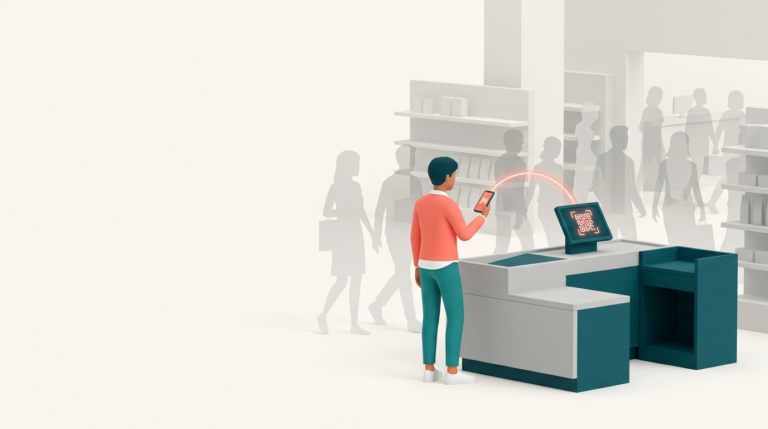

On 23 September 2026, the Federal Cabinet approved a bill, known as the Second Cash Register Act, that would make digital receipts the standard in Germany from 1 January 2028. The Federal Ministry of Finance has published the details in its press release of 23 September 2026. The Bundestag and the Bundesrat still have to approve the bill.
Key points at a glance
- From 1 January 2028, digital receipts would become the default. Businesses would still have to issue a receipt, but would no longer print one automatically.
- Customers would still be able to request a paper receipt.
- Businesses would be free to choose how to provide the digital receipt, for example with a QR code on the checkout display.
Why is Germany moving to digital receipts?
Since 1 January 2020, businesses in Germany have had to issue a receipt for every sale. In practice, that means printing a paper receipt every time, even when the customer does not want one. A digital receipt is already allowed today, but only if the customer agrees to it.
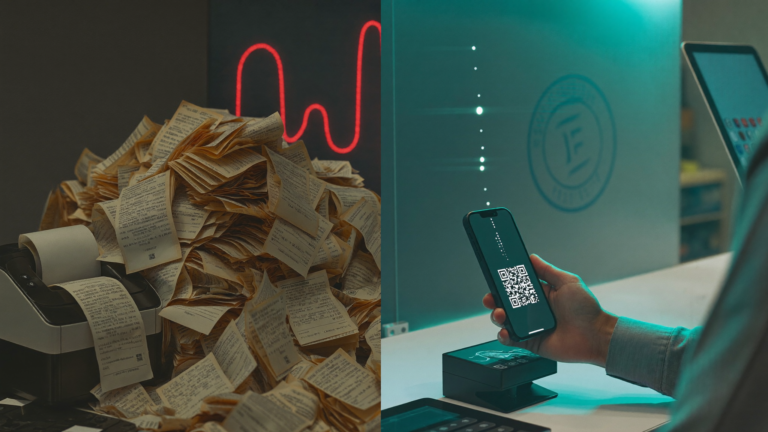
The bill would change this. Digital receipts would become the default, and paper would only be printed when a customer asks for it. Federal Minister of Finance Lars Klingbeil sums up the aim: “This means less bureaucracy for everyone, both for citizens and for businesses.”
Do businesses still have to issue a receipt?
Yes. The bill would change only the format. Businesses would still have to create a receipt for every sale, but it would reach the customer digitally instead of on paper.
Practical tip: Plan for a digital receipt at every checkout, rather than for no receipt at all. From 2028, the cash register would still have to create a complete and legally compliant receipt for every sale.
How do customers receive the digital receipt?
Businesses would be free to choose how to provide the receipt. The ministry lists these options:
- A QR code on the checkout display
- A download link
- The customer’s account with the business
- NFC, where the customer holds their phone to the terminal
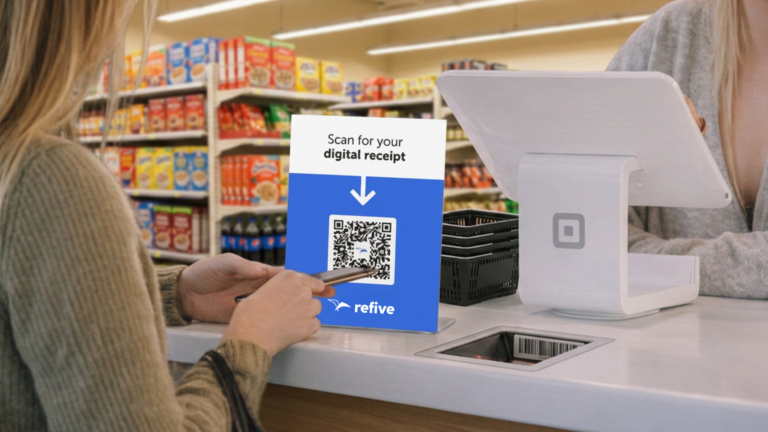
According to the ministry, a QR code on the checkout display is the most practical option, as customers can scan it without installing the business’s own app. However, the QR code would not be mandatory.
What happens next?
The bill has not yet become law. Both chambers of the German parliament, the Bundestag and the Bundesrat, must still approve it. Under Article 76 of the Basic Law, the Bundesrat has six weeks to comment, or nine weeks if it requests an extension. The Bundestag then votes, after which the bill returns to the Bundesrat under Article 77 of the Basic Law. No dates have been published yet.
How can refive help you with us?
If the bill passes, the digital receipt would become the standard receipt at German checkouts. The digital receipt from refive already works in the way the ministry considers most practical.
refive shows the QR code on the checkout screen, on a stand or on the payment terminal. Customers scan it with their phone camera, and the receipt opens in the browser. Neither an app nor a sign-up is required to open it. Customers can also receive the receipt with an NFC tap or by email.
A digital receipt is also where the relationship with the customer begins. Most shoppers pay and leave without the business knowing who they are. With refive, customers can sign up straight from the receipt. It’s their own choice, confirmed with double opt-in. This turns anonymous buyers into known customers. The business can then grow its CRM and loyalty programme and bring customers back for their next visit.
Let’s introduce digital receipts at your checkout: book a 30-minute call